
You've heard the pitch. Some vendor shows up at your door (or your inbox) selling an "AI-powered solution" that will "revolutionize your operations." Sounds great. Costs $2,000 a month. Requires a 12-month contract. And nobody can actually explain what it does for your Tuesday night dinner rush.
Here's the problem: most restaurant owners are being asked to buy AI tools before they even know what they need. It's like walking into a restaurant supply store blindfolded and grabbing whatever's on the first shelf.
An AI SWOT analysis fixes that. It's a structured assessment of where AI can actually help your specific restaurant — and where it's just expensive noise. Before you spend a dollar on automation, you need to know what's broken, what's working, and where the real opportunities are.
Let's break down what an AI SWOT analysis actually looks like for a restaurant, why it matters more than any tool you'll buy this year, and how to get one without hiring a consulting firm that charges by the slide.
What Is an AI SWOT Analysis?
SWOT stands for Strengths, Weaknesses, Opportunities, and Threats. It's been a business strategy tool since the 1960s. The "AI" part means applying that framework specifically to your restaurant's relationship with artificial intelligence and automation.
Here's what that covers in practice:
The point isn't to scare you. It's to give you a map before you start driving.
Why Most Restaurants Skip This (And Pay for It Later)
The average independent restaurant owner doesn't have time to research AI tools. You're running a business that operates 14 hours a day, employs people who call out sick, and serves food that has to be perfect every single time. Nobody's sitting around reading white papers on machine learning.
So what happens? A sales rep shows up with a slick demo. The tool looks impressive. You sign up. Three months later, you're paying $300 a month for something your staff ignores because it doesn't fit how your kitchen actually works.
This is the pattern across the industry. Restaurants buy tools first and figure out their needs second. An AI SWOT analysis reverses that order. It asks: before we talk about tools, let's understand your operation.
Casey's — the convenience store chain — derives one-third of all transactions from loyalty members and sends 200 million personalized communications through its loyalty system each month. That didn't happen because they bought a loyalty app. It happened because they understood their data, their customer behavior, and their operational capacity first. Then they built (and bought) tools that matched.
Independent restaurants need the same clarity, just at a smaller scale. A good AI SWOT assessment gives you that in a few pages, not a 40-slide deck.
What a Restaurant AI SWOT Assessment Actually Covers
Not all SWOT analyses are created equal. A generic business SWOT won't tell you much about AI readiness. Here's what a restaurant-specific AI SWOT should include:
1. Operational Bottleneck Mapping
Where are you spending the most manual hours? Common findings include:
- Scheduling: Owners spend 3-8 hours per week building and adjusting schedules. AI scheduling tools can cut that by 70% while reducing no-shows.
- Inventory: Manual counts and gut-feel ordering lead to 4-10% food waste on average. AI inventory tracking can reduce waste by identifying patterns humans miss.
- Review management: Responding to reviews across Google, Yelp, and social media takes 2-4 hours weekly. AI can draft responses in your voice for approval.
- Vendor ordering: Repeating the same orders every week by phone. Automatable with rules and triggers.
2. AI Readiness Score
Not every restaurant is ready for the same level of automation. A SWOT assessment should score your readiness based on:
- Digital infrastructure (POS system, internet reliability, device access)
- Staff comfort with technology
- Data quality (do you track anything, or is it all in someone's head?)
- Budget flexibility for tools
3. ROI Estimation by Area
This is where it gets practical. For each bottleneck identified, the assessment should estimate:
- Hours saved per week
- Dollar value of those hours (at your actual labor cost, not some industry average)
- Tool cost to solve it
- Net monthly savings
4. Prioritized Roadmap
The most valuable part. Not "here are 12 things you could do" but "here are the 2 things to do first, in this order, and here's why."
A good roadmap accounts for dependencies (you can't automate vendor ordering before you digitize your inventory), budget (start with the highest ROI, lowest cost), and staff capacity (don't roll out three new systems in the same week).
How Burger King Proves the Point
Burger King just announced plans to hire 60,000 workers across 6,500 U.S. restaurants. Not because their AI investments failed — because they succeeded. More tech channels (mobile ordering, delivery apps, AI-assisted drive-thrus) means more simultaneous order streams means more hands in the kitchen.
The lesson for independent operators: AI doesn't replace the human work in a restaurant. It replaces the administrative and operational friction that surrounds the human work. BK figured out where technology orchestrates and where humans execute. An AI SWOT analysis helps you figure out the same thing at your scale.
You don't need 60,000 employees. But you do need to know which tasks your people should stop doing so they can focus on the ones that actually matter — the cooking, the hosting, the problem-solving that happens at 7:30 on a packed Saturday night.
The Real Cost of Not Knowing
Let's put numbers to it. A typical independent restaurant with 1-3 locations might be losing:
- $500-800/month in food waste from manual inventory
- $600-1,200/month in owner/GM time spent on admin that could be automated
- $200-400/month in lost repeat customers from inconsistent follow-up marketing
- $100-300/month in scheduling chaos (last-minute callouts, overtime, coverage gaps)
The restaurants winning right now aren't the ones with the fanciest tech. They're the ones who figured out where they're bleeding and stopped it with the right tool for the job. That starts with an honest assessment, not a sales pitch.
What to Look For in an AI SWOT Assessment
If you're considering getting one, here's what separates a useful assessment from a generic report:
It should be specific to your restaurant. If the assessment could apply to any business, it's not worth paying for. It should reference your actual hours, your actual POS system, your actual pain points.
It should include a readiness score. Not every restaurant is ready for the same tools. The assessment should tell you where you are today, not just where you could be.
It should prioritize ruthlessly. A 20-item action list is useless. You need "do this first, then this, skip the rest for now."
It should estimate real ROI. Not vague "efficiency gains" but actual dollar amounts based on your operation.
It should come with a conversation. The best assessments include a discovery call where someone who's worked in restaurants asks you the right questions. A form alone misses the nuance.
Getting Started
An AI SWOT analysis isn't a commitment to buy anything. It's a commitment to understanding your business better before you make decisions about it.
The restaurant industry is at an inflection point. Chains are investing heavily in AI. Tech-forward independents are gaining ground. The middle — the owners who haven't started thinking about this yet — is where the biggest risk lives.
You don't need to become a tech expert. You need a clear picture of what's possible for your specific restaurant, what it would cost, and what it would save. That's what a good AI SWOT assessment delivers.
If you want to see what one looks like for your restaurant, we do them every week. No jargon, no 12-month contracts, no obligation. Just a clear-eyed look at where AI fits — and where it doesn't.
Get your AI SWOT Assessment — because the best time to figure out your AI strategy was last year. The second best time is before your competitor does.
Next step
Find your fastest AI revenue and time wins.
If this article sparked ideas, don't leave them as ideas. Get a Claw Prime AI SWOT assessment and we'll map the highest-leverage opportunities for your business.
Keep reading
Related posts
More practical guidance for owners who want less busywork and better follow-up.

How to Set Up an AI Agent That Actually Works (Step-by-Step)
Setting up an AI agent for your restaurant doesn't require a CS degree or a server room. This no-jargon guide walks you through the whole process in about 30 minutes, from picking a platform to letting it run your admin work.
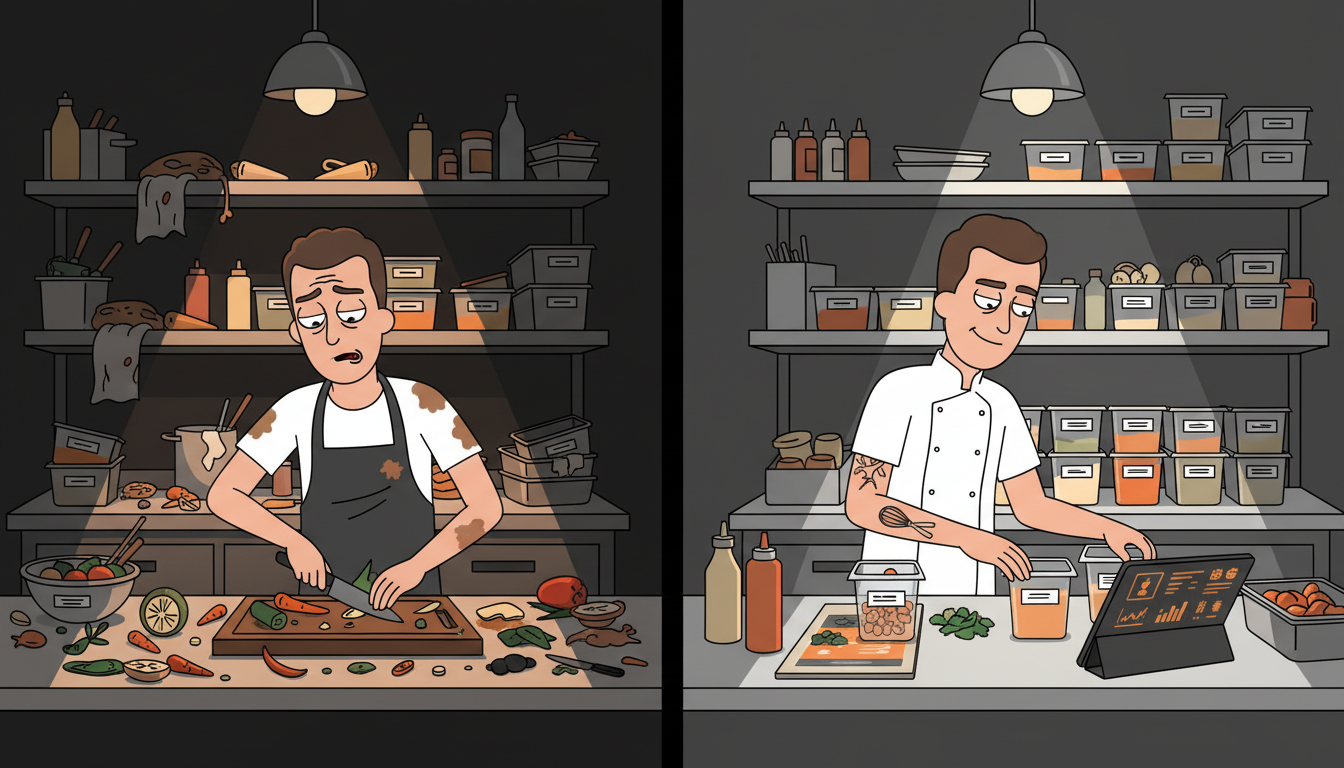
How to Reduce Food Waste with Predictive AI for Your Restaurant
For every $100 your restaurant spends on food, $4 to $10 ends up in the trash. That's not a guess — it's the industry average. For a mid-size restaurant doing $15K a week in food sales, that's $25,000
How to Automate Staff Scheduling with AI
Your manager spends 4-6 hours a week building schedules that still end up wrong. Here's how AI builds better schedules in 10 minutes using your existing tools and POS data.