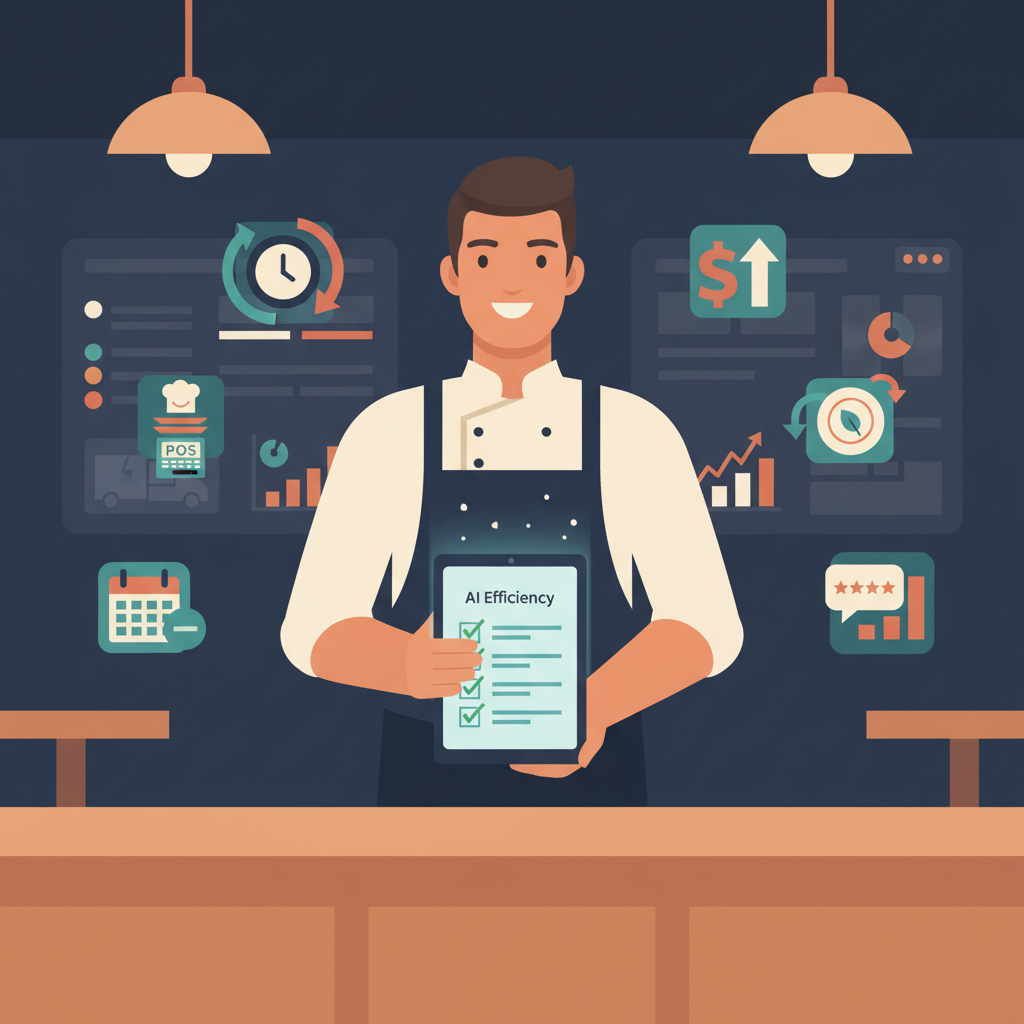
69% of restaurants say they're adopting AI. But here's the thing — only about 25% are actually using it. That gap isn't because restaurant owners don't want the help. It's because most AI solutions are built for chains with six-figure tech budgets, not for the family-owned spot running 12 employees and razor-thin margins.
We work with restaurants every day. We've seen what actually moves the needle and what's just expensive noise. Here are 7 AI wins that real restaurants are using right now — no PhD required, no enterprise contract needed.
1. Stop Losing Customers to Bad Follow-Up
Most restaurants lose a customer not because the food was bad, but because nobody followed up. The reservation went fine, the meal was great, and then... nothing. No thank you, no "here's what's new," no reason to come back.
A simple AI follow-up system can send personalized messages after every visit. Not spam — actual useful stuff. "Your table's ready for Friday" reminders. "We added a new pasta you'd love" based on what they ordered last time. Restaurants using automated follow-up see 15-20% more repeat visits within 90 days.
The setup takes an afternoon. The ROI compounds every single week.
2. Inventory That Actually Predicts Instead of Reacts
Here's what happens in most restaurants: you order chicken on Monday, run out on Friday, and order too much the next week because you're paranoid. It's a cycle of waste and shortage.
AI inventory management tracks your actual usage patterns — day of week, weather, local events, seasonal trends — and tells you exactly how much to order. Not a gut feeling. Not last week's number plus 10%. Real data.
The National Restaurant Association found that food waste alone costs the average restaurant $25,000-$75,000 per year. Even cutting that by a third pays for the tool ten times over.
3. Scheduling That Doesn't Make Everyone Angry
Staff scheduling is where restaurant managers go to suffer. You're balancing labor laws, employee preferences, busy periods, call-outs, and the one person who can only work Tuesdays and every other Thursday.
AI scheduling takes your historical traffic data, employee availability, and labor requirements, then builds the schedule in minutes. It even predicts when you'll be short-staffed based on booking trends and local events.
One restaurant we worked with cut scheduling time from 6 hours a week to 45 minutes. The manager got her Saturdays back.
4. Menu Pricing Based on Real Numbers, Not Guesswork
Most restaurants set prices based on what the place down the street charges, then never revisit them. Meanwhile, your food costs changed three times this quarter.
AI-powered menu analysis looks at your actual ingredient costs, waste rates, dish popularity, and profit margins — then suggests pricing adjustments. Not a massive reprice. Just the items where you're unknowingly losing money.
We've seen restaurants recover 3-5% margin just by fixing the three dishes they were accidentally undercharging for.
5. Review Management That Doesn't Sound Like a Robot
Every restaurant owner knows they should respond to reviews. Almost none of them have time to do it well. So either it doesn't get done, or it gets done badly with generic "Thanks for your feedback!" responses.
AI can draft personalized responses to every review — positive and negative — in your actual voice. You approve them with one tap. The responses reference specific details from their visit, not copy-paste templates.
Restaurants that respond to reviews see 1.5x more reviews over time and higher average ratings. Google notices too — active review management improves your local search ranking.
6. Phone and Reservation Chaos, Handled
Your phone rings 40 times during dinner service. Half are reservation requests, a quarter are "what are your hours," and the rest are delivery order complaints. Your host can't seat tables and answer phones at the same time.
An AI phone assistant handles reservations, answers common questions, and routes real issues to a human. It works 24/7, never puts anyone on hold, and doesn't get flustered when it's busy.
The average restaurant misses 15-20% of incoming calls during peak hours. Every missed call is a missed table.
7. Know What's Coming Before It Hits You
The restaurants that survive downturns aren't the ones that react fastest — they're the ones that saw it coming. AI trend analysis watches your sales patterns, local competition, seasonal shifts, and even broader economic signals.
When your Tuesday lunch crowd starts thinning out, you'll know it's happening in week one — not month three when the numbers finally show up in your accountant's report. That early warning gives you time to run a promotion, adjust staffing, or pivot your approach.
Where to Start
You don't need all seven. You need the one that solves your biggest headache right now.
That's exactly what our AI SWOT Assessment does. We analyze your specific operation — your pain points, your tech stack, your team, your goals — and give you a prioritized roadmap. Not generic advice. A custom plan for your restaurant.
Take the free AI readiness quiz to see where you stand, or grab our free guide for 7 practical ways to start using AI today.
No fluff. No hype. Just what actually works.
Next step
Find your fastest AI revenue and time wins.
If this article sparked ideas, don't leave them as ideas. Get a Claw Prime AI SWOT assessment and we'll map the highest-leverage opportunities for your business.
Keep reading
Related posts
More practical guidance for owners who want less busywork and better follow-up.
5 Ways AI Is Actually Helping Restaurants Right Now (No Hype)
Forget the hype. Here are five things AI is actually doing in real restaurants right now — from review responses to food cost tracking — with real numbers and zero jargon.

5 AI Agent Workflows You Can Set Up This Weekend (No Coding Required)
You don't need a tech degree or a $50K consulting contract. Here are five AI agent workflows you can wire up on a Saturday afternoon — no coding required.
How One AI Agent Can Replace 20 Hours of Weekly Admin Work
You close the restaurant at 11 PM. By 11:15, you're sitting at the bar with a laptop, answering emails that should've been answered Tuesday. Sound familiar? Here's how an AI agent takes 20 hours of admin off your plate every week.