5 Ways AI Is Actually Helping Restaurants Right Now (No Hype)
You've seen the headlines. "AI is revolutionizing the restaurant industry!" Followed by 2,000 words of buzzwords that tell you nothing about what to actually do Monday morning. We're not doing that here.
This post covers five things AI is doing for restaurants right now. Not in 2030. Not at some mythical chain with a $500K tech budget. Right now, in real kitchens, saving real time and real money.
No hype. No jargon. Just the stuff that works.
1. Responding to Reviews While You Sleep
Here's a number that should bother you: 94% of diners choose restaurants based on online reviews, and 53% won't even consider a place with under 4 stars. Meanwhile, the average restaurant owner spends 30+ minutes a day crafting responses across Google, Yelp, and TripAdvisor. Or more realistically, they ignore the reviews entirely and hope for the best.
AI review response tools read each review, generate a personalized reply that matches your tone, and post it on your behalf. Good ones handle negative reviews differently from positive ones. They flag the one-star rants that need your personal attention and handle the rest automatically.
This isn't about gaming the system. It's about showing customers you're paying attention without spending your entire lunch break on Yelp. Restaurants using AI-assisted review management typically see response rates jump from under 20% to over 90% within the first month. That consistency signals to both customers and search algorithms that you're an active, engaged business.
The setup takes about an hour. You train the system on a few of your past replies so it learns your voice, set guardrails (never offer refunds automatically, flag health complaints), and let it run.
What most owners don't realize is that Google's algorithm actually rewards businesses that respond to reviews consistently. Higher response rates correlate with better local search rankings. So this isn't just customer service, it's local SEO that works while you're plating entrees.
2. Building Schedules That Don't Require a Group Text at 6 AM
If your scheduling strategy is texting "who can come in" at 6 AM on a Saturday, this section is for you.
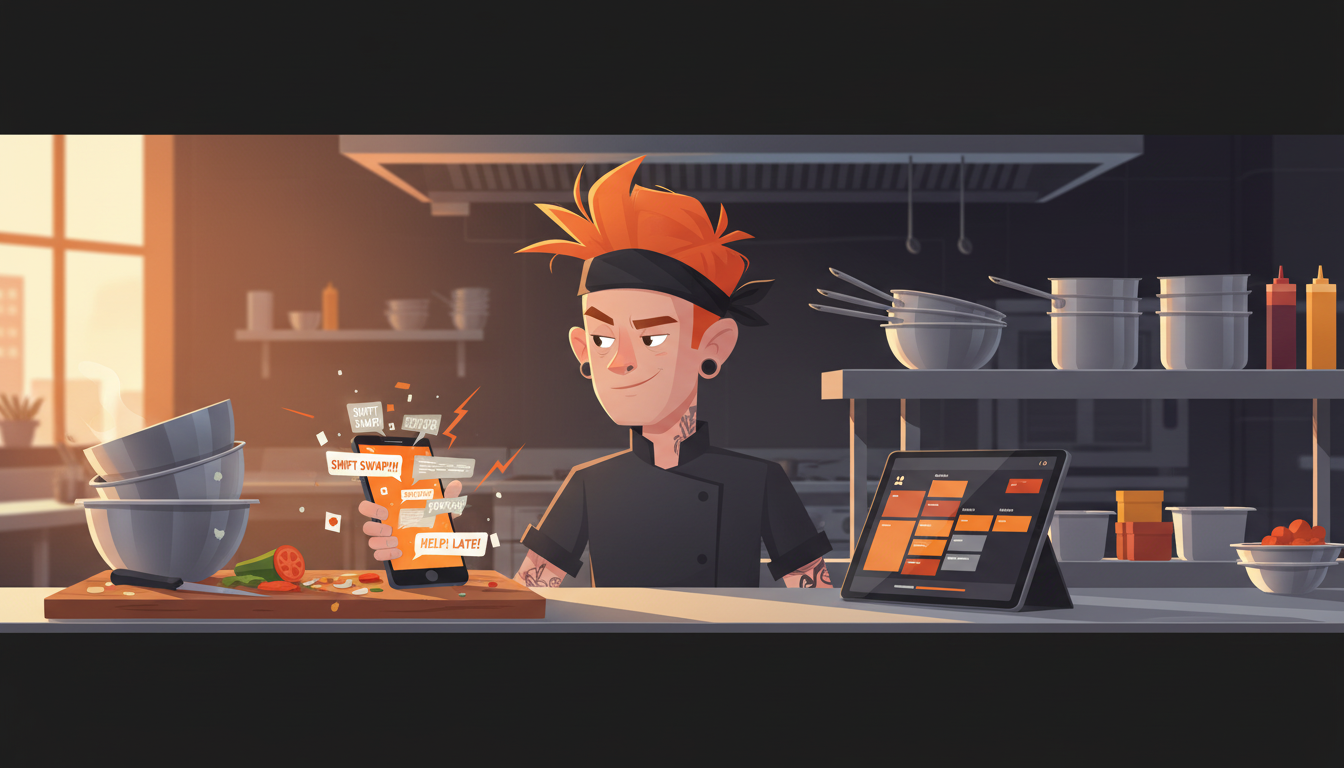
Restaurant scheduling is one of the most frustrating parts of management. You spend 4-6 hours building a schedule, then three people ask to swap before it even starts. Someone calls off 2 hours before their shift. The group text explodes. You end up working the line yourself because it's faster than solving the puzzle.
AI scheduling tools analyze your POS data to predict how busy each shift will be. They factor in seasonality, weather, local events, and historical patterns. Instead of guessing that Tuesday lunch needs 4 servers, the system knows from your own sales data that you need 3.5 on average but 5 when there's a convention downtown.
The real magic is the swap and call-off handling. Modern AI scheduling platforms can automatically find coverage when someone calls off, checking availability, overtime status, and labor cost impact before suggesting a replacement. No more 45-minute phone trees.
One thing to know: these tools work best with at least 3-4 weeks of historical data. The more shifts it sees, the better it predicts. If you've been tracking sales by hour in your POS, you're already sitting on the data it needs.
The labor savings go beyond just building the schedule. When you're not spending 5 hours a week on scheduling, that's 5 hours back in your week. Over a year, that's 260 hours, or the equivalent of hiring a part-time employee without adding a single dollar to payroll.
3. Catching Food Cost Problems Before They Kill Your Margin
Food cost is the number that keeps restaurant owners up at night, and for good reason. The industry target is 28-35% of revenue, but most owners don't know their actual food cost until the accountant runs numbers weeks later. By then, the $400 you overpaid for chicken is ancient history.
AI-powered food cost monitoring connects to your POS and tracks ingredient costs against menu prices in real time. When your supplier raises the price of ribeye by 12%, the system flags it immediately. It recalculates your per-plate cost and tells you which menu items just went from profitable to break-even.
Some tools go further and suggest adjustments. If beef costs spike but chicken is stable, the system can recommend rotating a special or adjusting portion sizes. Not to rip customers off, but to protect your margin without a gut-wrenching menu reprint.
According to the National Restaurant Association, the average restaurant wastes 4-10% of purchased food. For a mid-size place doing $1.5 million a year, that's $60,000 to $150,000 walking straight into the dumpster. AI inventory tracking that monitors usage patterns against ordering can cut that waste by a third or more in the first quarter.
The best part: most modern POS systems already capture the data. The AI just needs permission to read it and a connection to your supplier invoices. No new hardware required.
One owner we talked to told us he discovered he was paying 18% more for produce from one vendor compared to another, for the exact same items. He'd been ordering from the same supplier for 6 years out of habit. The AI flagged it in week two. He saved $14,000 in the first quarter just by switching vendors for three ingredients.
4. Handling the Phone So You Can Handle the Kitchen
"Are you open today?" "Do you have gluten-free options?" "Can I make a reservation for 6?" "What's your address again?"
If your phone rings off the hook with these questions, you're not alone. A single missed call during dinner service costs an average restaurant $50-200 in lost revenue. Multiply that by the calls you miss every Friday and Saturday night, and you're looking at thousands of dollars a month walking away to voicemail.
AI phone systems designed for restaurants handle the common questions automatically. They take reservations, answer FAQs about hours and menu items, and can even process takeout orders. The good ones transfer to a real person when the question is unusual or the customer sounds frustrated.
This isn't a robocall. Modern AI voice systems sound natural, understand context, and can handle multi-turn conversations. A customer can ask "Do you have outdoor seating?" and when you say yes, follow up with "Can I reserve a table outside for 7 PM on Friday?" The system checks availability, books it, sends a confirmation, and adds it to your reservation platform.
Restaurants that have implemented AI phone answering report catching 40-60% more inbound orders and reservation requests. That's revenue that was literally ringing and going to voicemail before.
The technology has gotten surprisingly affordable. Some systems cost less than $100 per month, which is less than what most restaurants lose on a single Saturday night of missed calls. If you're paying a host to answer phones during service, an AI system can handle the overflow so your staff focuses on the guests standing in front of them.
5. Turning Your POS Data Into Actual Decisions
Your POS system is collecting hundreds of data points every shift. Which items sell on Tuesdays versus Saturdays. How long tickets take. Which servers turn tables fastest. What percentage of customers order appetizers. How weather affects your bar sales.
And you're looking at none of it. Not because you don't care, but because the reports are a nightmare. Fourteen tabs, nine different date ranges, and data that tells you what happened last week but not what to do next week.
AI analytics layers on top of your existing POS and turns raw data into specific recommendations. Instead of a 30-page report showing Tuesday sales were down 8%, it tells you: "Your Tuesday lunch sales have dropped 8% for three consecutive weeks. Three competitors within a mile launched lunch specials in April. Consider a prix fixe lunch menu at $15 to compete."
The shift from descriptive analytics (what happened) to prescriptive analytics (what to do about it) is where AI genuinely earns its keep. It's not about replacing your judgment as an owner. It's about giving you better inputs for the decisions you're already making.
Square, Toast, and Clover all have growing AI analytics ecosystems. Some are built in, others are third-party integrations. The barrier to entry is lower than most owners think.
Here's a real example: a fast-casual spot in Austin noticed their Thursday dinner numbers were declining for three months straight. Their POS analytics showed the decline but not the cause. An AI layer correlated it with a new competitor that opened two blocks away and started running Instagram ads every Thursday. The AI suggested a Thursday-only happy hour promotion. Within six weeks, Thursday revenue was back to baseline.
That kind of cross-referencing, sales data against external factors, is something no human has time to do manually. But AI can run those correlations constantly and surface the ones that actually matter.
So What Do You Actually Do With This Information?
If you read this list and thought "that sounds useful but I have no idea where to start," that's normal. Most restaurant owners feel the same way. The gap between knowing AI can help and knowing which AI to use for your specific restaurant is real.
That's exactly why we built our free AI Readiness Quiz. It takes about 5 minutes, asks questions about your current operations, and shows you exactly where AI fits your restaurant. Not generic advice. Specific recommendations based on what you're actually dealing with.
Get your free AI Readiness Quiz — takes 5 minutes, shows you exactly where AI fits your operation.
No commitment. No sales pitch. Just a clear map of where automation can save you time and money this month, not next year.
Next step
Find your fastest AI revenue and time wins.
If this article sparked ideas, don't leave them as ideas. Get a Claw Prime AI SWOT assessment and we'll map the highest-leverage opportunities for your business.
Keep reading
Related posts
More practical guidance for owners who want less busywork and better follow-up.
7 Practical AI Wins Every Restaurant Owner Should Know About in 2026
69% of restaurants say they're adopting AI, but only 25% are actually using it. Here are 7 practical wins that real restaurants use right now — no PhD required.
How One AI Agent Can Replace 20 Hours of Weekly Admin Work
You close the restaurant at 11 PM. By 11:15, you're sitting at the bar with a laptop, answering emails that should've been answered Tuesday. Sound familiar? Here's how an AI agent takes 20 hours of admin off your plate every week.

How to Set Up an AI Agent That Actually Works (Step-by-Step)
Setting up an AI agent for your restaurant doesn't require a CS degree or a server room. This no-jargon guide walks you through the whole process in about 30 minutes, from picking a platform to letting it run your admin work.